Jim Gillies CAB, CDBC is a Clinical Animal Behaviourist based in Glasgow with over a decade of experience across a wide range of canine behaviour issues. He is an APBC Full Member, ABTC Registered, and IAABC Certified Dog Behaviour Consultant — and works across clinical consultations, veterinary collaboration, and expert witness instruction. His practice is welfare-led and evidence-based throughout. Jim runs CBT Dog Behaviour & Training and shares behaviour insights through his blog and podcast.

How to muzzle train your dog is an essential process in dog training, often overlooked by many pet owners. Contrary to popular belief, muzzles are not just for aggressive dogs; they are a vital tool for ensuring safety during grooming, veterinary visits, or interactions with other animals and people. This article delves into the benefits and methods of muzzle training your dog, complemented by insights into canine behaviour and recommended products to facilitate the training process.
Understanding the Need for Muzzle Training
Muzzle training is an often misunderstood but crucial aspect of responsible dog ownership. It not only promotes safety but also enhances the well-being of dogs and people alike.
Why Muzzle Train?
Muzzle training is essential for numerous reasons. Primarily, it ensures the safety of both the dog and those around it, particularly in unpredictable or stressful situations. This training is especially pertinent given recent legislative changes concerning specific breeds, such as the American XL Bully. The potential changes in law highlight the importance of being proactive in training methods to ensure compliance and safety. For more information on this, please refer to our detailed discussion on the future of the potential XL Bully ban here.
Safety First: Protecting Dogs and People
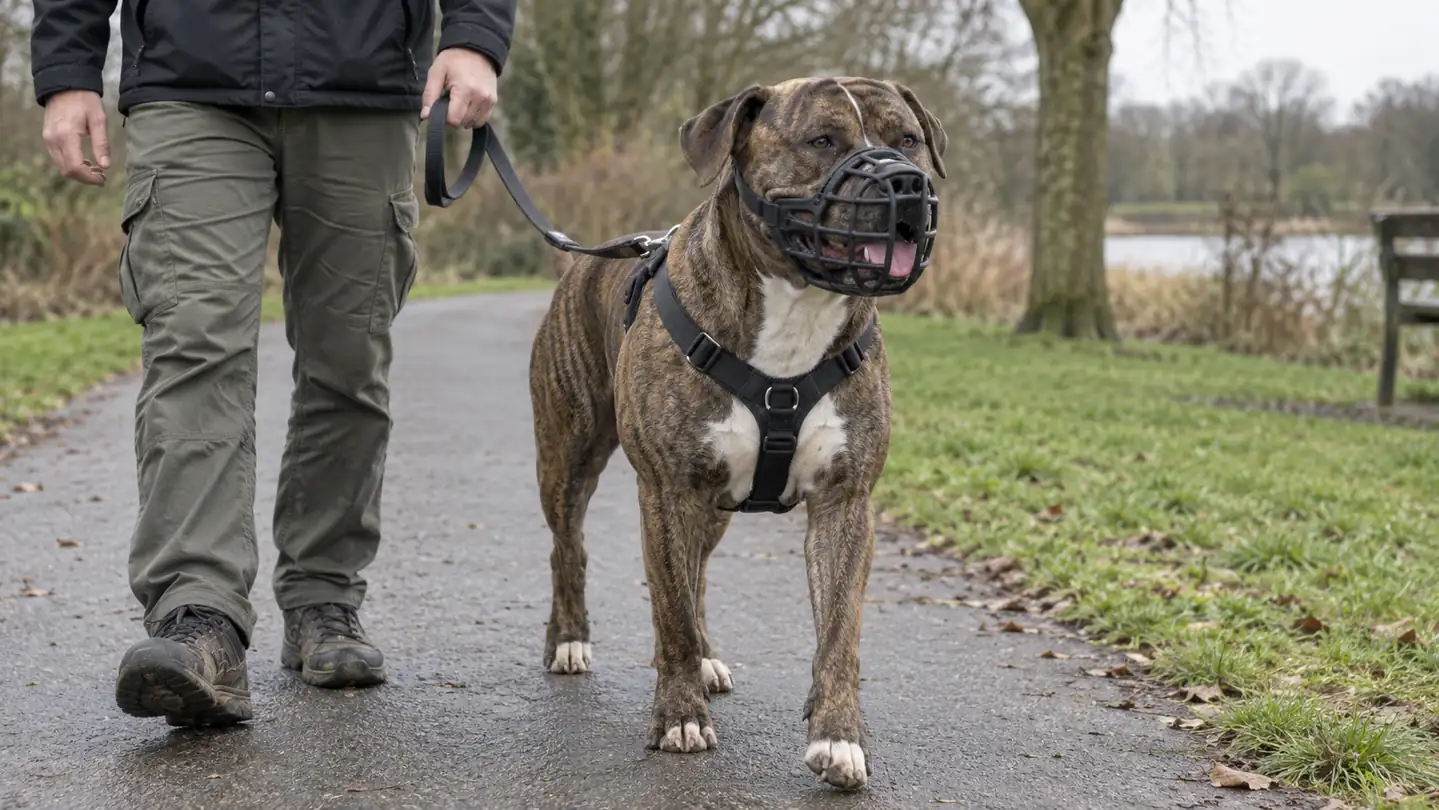
The primary goal of muzzle training is to protect both dogs and people. In scenarios where a dog may feel threatened or stressed, a muzzle can prevent dog bites or aggressive behaviour. This is particularly crucial in public spaces or in situations where a dog is likely to encounter unfamiliar people or other animals. However, it's important to note that muzzle training should always be approached with the dog's comfort and well-being in mind. Properly fitted muzzles that allow for panting and drinking are essential.
Important Note About Safety in Muzzle Training
The process of muzzle training should be safe and positive for the dog. Gradual introduction of the muzzle, paired with positive reinforcement, helps the dog associate the muzzle with positive experiences, reducing stress and anxiety. This approach is critical, especially for dogs with behavioural issues like resource guarding, where the introduction of a muzzle might initially be met with resistance.
For a comprehensive guide on understanding and managing resource guarding in dogs, just click on the link.
Considering Dogs with Aggressive Tendencies
Muzzle training is particularly vital for dogs that have shown aggressive tendencies. It is a responsible step in preventing potential incidents while allowing for safe and effective behaviour modification techniques to be applied. Understanding the root causes of aggression and employing humane, effective behaviour modification strategies is key.
For an in-depth look into dog aggression, its causes, and effective behaviour modification techniques, you can read more here.
Recognising Signs of Fear in Dogs: Key Body Language Indicators
Familiarise yourself with these important body language signs. If you see any of these indicators, go back a step and work at the level before increasing complexity or intensity in the muzzle training process.
- Avoidance Behaviours:
- Turning the head away from a person or object.
- Moving or backing away.
- Hiding behind the owner or under furniture.
- Refusing to make eye contact.
- Whale Eye (or Half-Moon Eye):
- The dog shows the whites of its eyes (sclera) by looking to the side without turning its head.
- This often occurs when the dog feels trapped or cornered.
- Body Posture:
- Lowered body posture, with the dog trying to appear smaller.
- Tucked tail, often between the legs.
- Ears pinned back against the head.
- Lip Licking and Yawning:
- Excessive licking of the lips or yawning when not tired or hungry.
- These are calming signals that a dog might display when nervous or stressed.
- Panting or Drooling:
- Excessive panting or drooling, not related to physical exertion or heat.
- These can be signs of stress or anxiety.
- Trembling or Shivering:
- Shaking or trembling that is not caused by cold temperatures.
- This can be a sign of fear or nervousness.
- Change in Eye Contact:
- Sudden avoidance of eye contact or, conversely, intense staring.
- Both can be indicators of discomfort or stress.
- Freezing:
- Sudden immobility or stiffness in the body.
- This can signal that the dog is feeling threatened and may react defensively.
For a deeper understanding and illustrative examples, we invite you to explore our detailed article on fear aggression in dogs.
Step-by-Step Muzzle Training
Stage 1 - Introducing the Muzzle
Introduction to the Muzzle: Begin by allowing your dog to sniff and explore the muzzle. This familiarization process helps reduce anxiety and fear associated with the muzzle. Using a Tupperware tub can help initially.

Stage 2 - Forming a Positive Association
Positive Reinforcement: Use treats and positive reinforcement to encourage your dog to put your dog's mouth and nose in the muzzle willingly.

Stage 3 - Building Trust & Predictability
Build trust and predictability by bringing hands down to touch the dog's muzzle. This will help desensitise your dog to your hand movement in and around the muzzle.

Stage 4 - Turning the Muzzle into a Target
Gradually lift up the muzzle. Go slowly and monitor your dogs body language. This can be a big step for our dogs so be patient. If you see any fear, go back a step and work more on the positive association and desensitising your hand movements.

Stage 5 - Desensitise the Straps
Begin working on desensitising the straps. Make sure your dog voluntarily moves into the muzzle, ideally pushing into it. Go ahead and fasten the straps. From that point, just gradually build tolerance in very short periods and incremental steps and that's your dog muzzle trained!

Note: Throughout the training, observe your dog’s comfort level and adjust the dog's pace accordingly. Going backwards to go forwards is always a good approach.
Selecting the Right Muzzle
Choosing the right muzzle is crucial. It should be comfortable, allow for panting and drinking, and be the correct size for your dog's ears and nose.
Our Recommendation for Basket Muzzle
Key features:
- Immediate Safety Measure
- Builds Public Trust
- Allows Socialisation
- Prevents Escalation
- Promotes Owner Confidence
Integrating Muzzle Training with Other Behavioural Training
Muzzle training should be part of a broader training regime. For instance, teaching your dog how to walk on a lead can be complemented with muzzle training. Similarly, for dogs exhibiting reactive behaviour, incorporating reactive dog training with muzzle training can be beneficial.
Managing Trigger Stacking During Muzzle Training
Trigger stacking refers to the accumulation of stressors that can make a dog more reactive or anxious. Managing these triggers is essential during muzzle training. Reducing environmental stressors and ensuring a calm training environment can make a significant difference. For more on this topic, visit Trigger Stacking in Dogs.
Understanding Types of Aggression in Muzzle Training
Different types of aggression, such as territorial, fear-based, or dominance aggression, require varied approaches in muzzle training. Each type of aggression presents unique challenges and understanding these can help tailor the training process effectively. For an in-depth understanding of aggression types, visit Types of Aggression in Dogs.
The Importance of Consistency and Patience
Consistency and patience are key in muzzle training. Dogs learn at different paces, and it's crucial to maintain a consistent training schedule. Patience is particularly important for dogs with a history of aggression or fear, as they may take longer to adapt to the muzzle.
Utilizing Professional Help
Sometimes, professional help may be necessary, especially for dogs with severe behaviour issues or for owners new to muzzle training. Seeking assistance from a dog behaviourist can provide tailored guidance and support. For those in Glasgow, Navigating the World of Glasgow Dog Trainers and Behaviourists offers valuable information.
Encouraging Positive Associations
Creating positive associations with the muzzle is crucial. This can be done by associating the muzzle with enjoyable activities or rewards. The goal is to make the dog perceive the muzzle as a very positive experience rather than a restrictive item.
Muzzle Up Project
For More Information To delve deeper into the Muzzle Up Project and access its extensive resources, visit their official website: Muzzle Up Project. Here, you'll find comprehensive guides, success stories, and support for integrating muzzle training into your dog's routine, aligning with principles of safety and positive reinforcement.
Frequently Asked Questions About Muzzle Training
1. How to Muzzle Train a Dog?
Muzzle training involves gradually acclimatising your dog's nose to wearing a muzzle through positive reinforcement. Start by introducing the muzzle in a non-threatening way, and progressively increase the duration your dog wears it so they enjoy wearing it.
2. How Long Does It Take to Muzzle Train a Dog?
The time required to muzzle train a dog varies based on the dog's temperament and past experiences. Generally, it can take a just a few seconds or few weeks of consistent training for a dog to become comfortable with a muzzle.
3. How to Train a Dog to Wear a Muzzle?
Begin by allowing your dog to sniff the muzzle, then use treats to encourage them to put their nose inside it. Gradually increase the time they wear it, always associating it a positive activity and wearing the muzzle happily.
4. How to Train Your Dog to Wear a Muzzle?
Consistency is key. Use positive reinforcement and ensure each training session ends on a positive note. Gradually build up to fastening the muzzle and then having your dog wear it for longer periods.
5. How to Basket Muzzle Train a Dog?
Basket muzzles are spacious and comfortable. Introduce it in a relaxed environment, allowing your dog to explore it. Use treats to encourage them to willingly put their nose into the basket style muzzle.
6. How to Muzzle Train a Reactive Dog?
For reactive dogs, start muzzle training in a low-stress environment. Ensure the training process is gradual and filled with positive reinforcements to build a positive association with the muzzle.
7. How Long to Muzzle Train a Dog?
The duration depends on your dog’s response to the muzzle. Some dogs may adapt within a few sessions, while others might need several weeks to get comfortable wearing it.
8. How to Train a Dog With a Muzzle?
Incorporate muzzle training into your regular training routine. Use it as a tool to safely manage and work on other behavioural issues.
9. How to Train Your Dog to Wear a Basket Muzzle?
Introduce the basket muzzle in a non-threatening manner. Allow your dog to sniff and explore it, using treats to encourage interaction and acceptance.
10. Can Muzzle Training Help with Other Behavioural Issues?
Yes, muzzle training can be part of a broader behavioural management strategy. It allows for safe interaction and training, especially for dogs with aggressive tendencies or anxiety issues.