Jim Gillies CAB, CDBC is a Clinical Animal Behaviourist based in Glasgow with over a decade of experience across a wide range of canine behaviour issues. He is an APBC Full Member, ABTC Registered, and IAABC Certified Dog Behaviour Consultant — and works across clinical consultations, veterinary collaboration, and expert witness instruction. His practice is welfare-led and evidence-based throughout. Jim runs CBT Dog Behaviour & Training and shares behaviour insights through his blog and podcast.
- Key Takeaways
- Can you still apply for an XL Bully exemption certificate?
- Keeping an existing exemption valid
- Insurance: the requirement has changed
- Child supervision: a change from 1 November 2026
- Which dogs fall within the XL Bully rules?
- Practical support with muzzle training
- Can an XL Bully be sold or rehomed?
- Summary
- Frequently Asked Questions
Guidance checked: 13 October 2026

If you own an XL Bully, it is important to understand both your dog’s exemption status and the conditions that apply where you live. This guide separates Scotland from England and Wales, rather than treating the original application schemes as one UK-wide process.
Key Takeaways
- The original owner-led exemption application schemes have closed.
- Scotland and England/Wales have separate exemption arrangements.
- Public muzzle and lead requirements and other exemption conditions still apply.
- Compulsory third-party liability insurance ended on 1 July 2026.
- New child-supervision conditions begin on 1 November 2026.
Can you still apply for an XL Bully exemption certificate?
The original owner-led application schemes have closed. In England and Wales, new exemptions require a court order. In Scotland, the Scottish Government can grant a new exemption only where a court has authorised the application. A certificate must remain valid for ownership to be lawful. See the England and Wales rules and Scottish rules.
If you do not have a certificate, do not rely on the old application forms or deadlines. In England and Wales, official guidance directs owners to their local police force. For a Scottish exemption enquiry, contact xlbullydogenquiries@gov.scot; the court-authorisation requirement still applies.

Keeping an existing exemption valid
Read the conditions on your certificate alongside the guidance for your jurisdiction. Public muzzle and lead requirements, secure accommodation, address notifications and access to certificate and microchip information remain important. The Scottish guidance also explains the limited allowance for temporary accommodation elsewhere in Scotland. See maintaining a Scottish exemption or maintaining an exemption in England and Wales.
Dogs must meet the applicable neutering and microchipping requirements. The England and Wales neutering deadlines have passed. Scotland has its own age-based requirements and documentation rules; check these with the Scottish Government rather than using an English deadline.
Insurance: the requirement has changed
Since 1 July 2026, third-party public liability insurance is no longer compulsory under these exemption arrangements in Scotland, England and Wales. Scottish guidance says existing insurance can continue until expiry. This change does not remove the other exemption conditions. Read the Scottish insurance guidance and Defra guidance.
Child supervision: a change from 1 November 2026
From 1 November 2026, new child-supervision conditions apply. In England and Wales, children under 12 must not be in close contact with an XL Bully in a private place without adult supervision. Scottish guidance requires a person aged 16 or over to be present whenever a child under 12 is with an exempted prohibited dog. Read the Scottish child-protection guidance and England and Wales guidance.
Which dogs fall within the XL Bully rules?
The official assessment uses a physical conformation standard. Scotland uses the same standard as England and Wales. Use the official identification guidance when considering whether a dog may fall within scope.
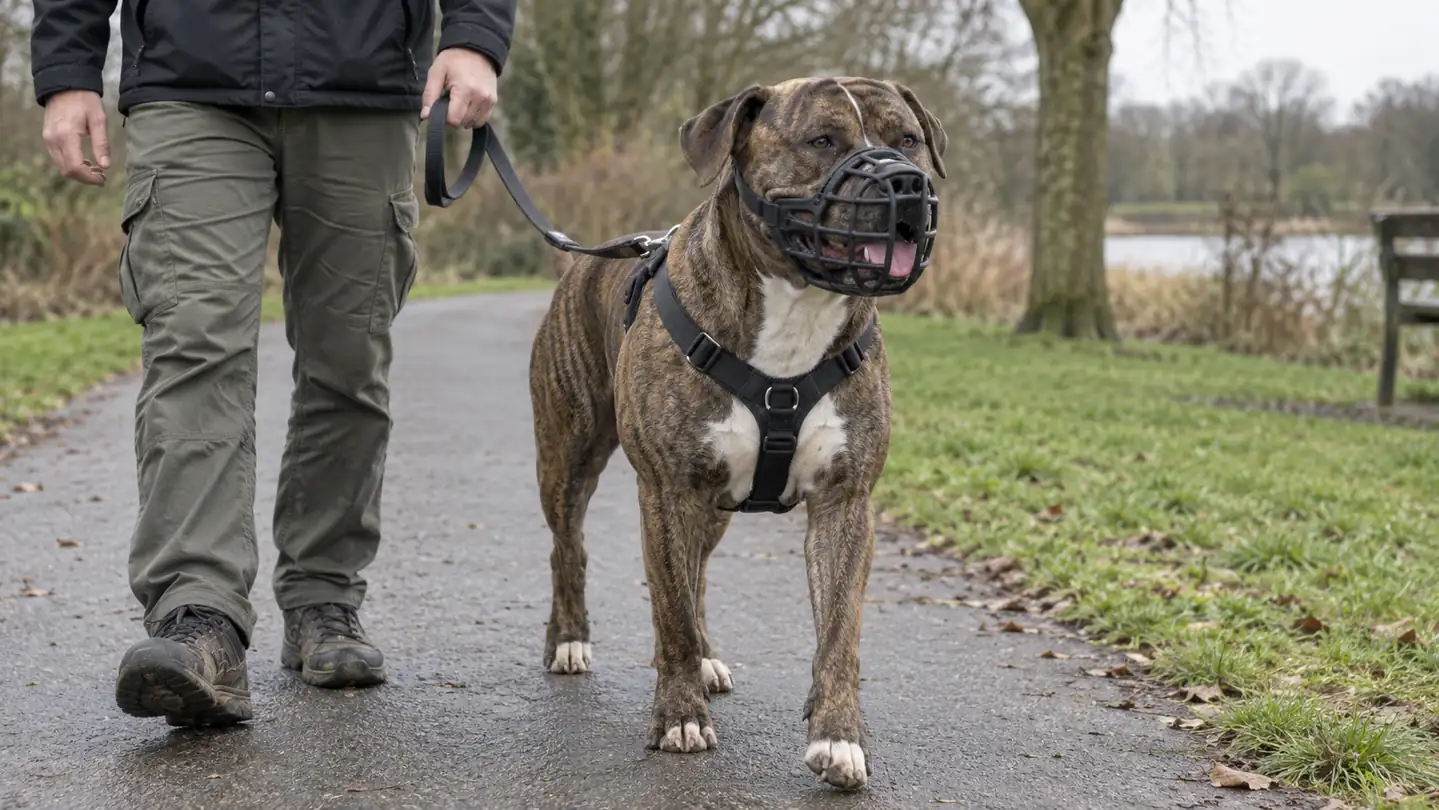
Practical support with muzzle training
Muzzle training can be introduced gradually using rewards, with attention to fit and your dog’s comfort. My muzzle-training guide explains the practical steps. Behaviour support can help with handling and welfare; it does not determine a dog’s legal type or confer exemption.
Can an XL Bully be sold or rehomed?
Selling, giving away, rehoming, breeding and abandoning XL Bullies are prohibited under the published rules. Do not assume that moving a dog to another owner is an alternative to exemption. Check the Scottish restrictions or England and Wales restrictions.
This guide covers Scotland, England and Wales. It does not cover Northern Ireland or replace advice on an individual legal case. Follow the current official guidance and obtain legal advice where exemption status or compliance is disputed.
Summary
The useful starting point is your dog’s current exemption status and the rules for where you live. Use the official guidance linked above, keep your records up to date, and introduce handling and muzzle training with your dog’s welfare in mind.
Frequently Asked Questions
Can I still use the original online application scheme?
No. The original owner-led schemes have closed. See the jurisdiction-specific guidance above for the court-authorised route.
Do I still need compulsory third-party liability insurance?
That exemption requirement ended on 1 July 2026 in Scotland, England and Wales. The other conditions remain.
Does behaviour training replace exemption?
No. Behaviour support and legal exemption serve different purposes. Training does not confer exemption or determine your dog’s legal type.
About Me
Jim Gillies is a Clinical Animal Behaviourist based in Glasgow, providing evidence-based behaviour support for dogs and their owners. He is an APBC Full Member, an ABTC Registered Clinical Animal Behaviourist, and an IAABC Certified Dog Behaviour Consultant (CDBC). With over a decade of professional experience, Jim works with a wide range of behaviour cases, including aggression, reactivity, separation-related distress, fears, phobias, and anxiety-related problems.
His work is grounded in ethical, welfare-led practice and focuses on practical, individualised support for each dog and household. In addition to one-to-one behaviour work, Jim shares guidance through his blog and podcast to help owners better understand their dogs and make informed decisions about behaviour support.
Contact Information
Email: jim@cbtdogbehaviour.com
Disclaimer
This post may contain affiliate links. This means I may earn a small commission at no additional cost to you if you choose to purchase through those links. Any recommendations are included where they are relevant to the topic and may be helpful to readers.
📖 Blog | 🎙️ Podcast | 🌐 cbtdogbehaviour.com